
Precious Elixir of Life
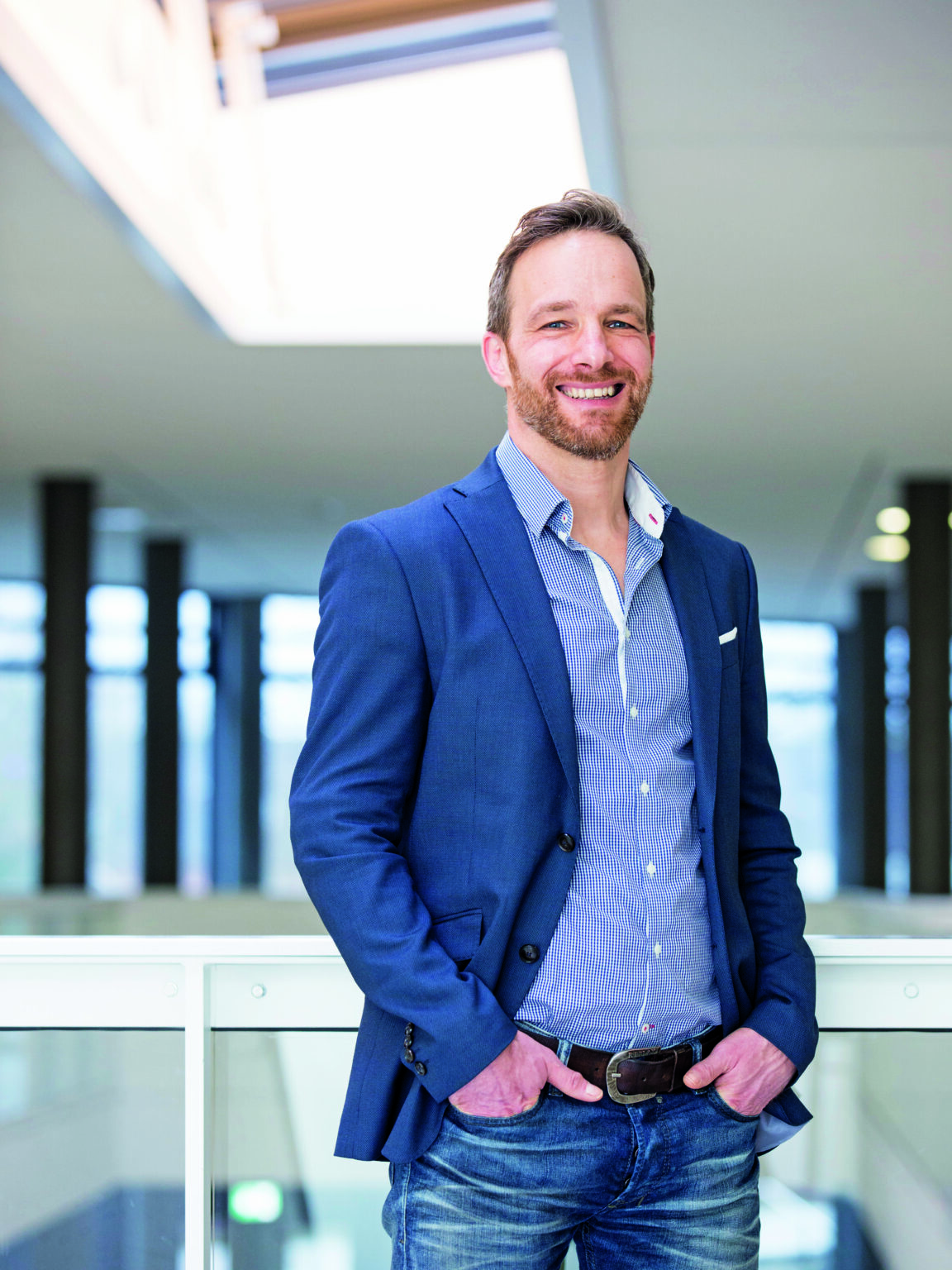
It has to be safe and clean and supply billions of people: water. Use of the resource is ever more intense, making a sustainable and global water cycle one of the most important societal challenges of our time. So the UDE established its main research area Water. Led by the Centre for Water and Environmental Research (ZWU), experts are investigating how we can manage to make clean drinking water and sanitary facilities available to every human being while preserving and improving aquatic ecosystems, and thus manage every aspect of water sustainably. Michael Eisinger, Director of the ZWU since 2008, outlines the centre’s tasks, challenges and strategies.
Dr. Eisinger, why do we need a Centre for Water and Environmental Research at the UDE?
Water is the basis of all life: we need it to drink, for food, to protect biodiversity; and it’s an economic factor, because roughly 78 percent of all businesses worldwide depend on water – 42 percent directly. So the task is to provide it in sufficient quantity and quality and to protect waters. Our work focuses on four aspects: (1) sustainable water quantity management to protect against damage and danger caused by water, (2) more efficient use in drinking and process water and effluent, (3) preservation and renaturation of aquatic ecosystems and (4) interlinking human health and that of the environment.
What are the challenges?
Climate change in particular is leading more and more often to weather extremes such as heat, drought and heavy rains. This endangers the supply of drinking and service water, threatens biodiversity, aquatic habitats and our health or damages infrastructure through flooding. In addition, population growth, structural change, agriculture and forestry and the transition to renewable energy all intensify conflicts: conservation and the demands of industry compete with one another. In order to develop a solution we need good communications, a scientific understanding, sustainable management of waters and water resources and of course societal involvement.
And how will the ZWU manage this?
Interdisciplinary networks that unite scientific and practical approaches are still rare. That is our Unique Selling Proposition: interdisciplinarity is at the heart of our major projects – with partners from natural, engineering, economic and social sciences as well as medicine. This means we can develop innovative solutions throughout the value-creation chain and integrate research and application. There is a tradition of regional cooperations between science and practice at the ZWU, see for example the completed project ‘Nature and the quality of life: The Ruhr metropolitan region as a sustainable urban cultural landscape’.
We realised this together with the Ruhr regional association (Regionalverband Ruhr, RVR), the Emscher river management association, the Lippeverband water board, and municipal governments, amongst others. In the end, promoting and networking our young researchers is extremely important to us, but this is not just for their academic careers but also in order to counteract the skills shortage in water management.