
The Environmental Specimen Bank
Travelling back in time to biological diversity: The German Environmental Specimen Bank stores more than 500,000 snapshots from various habitats throughout Germany at -150° C. They provide a window to environmental changes since the 1980s. The samples come from marine, freshwater and terrestrial ecosystems and are stored above liquid nitrogen at ultra-low temperatures. All chemical and biological information are thus preserved – including the genetic material, which can therefore still be analysed even decades later.
Under the overall control of the University of Duisburg-Essen (UDE), researchers in the ‘TrenDNA’ project are developing new genetic methods with which the mixtures of ground plant parts, fungi and small organisms will reveal even more in the future, for instance about the decline in insect populations and invasive species. High-throughput sequencing is the key word: Initial studies indicate that regions with a strong human influence have seen a clear decrease in the amount of species in the past decades.
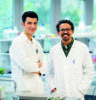
‘We want to provide reliable trend analyses that allow environmental problems to be identified and measures to be taken at an early stage,’ explains project director Prof. Dr. Florian Leese from the Aquatic Ecosystem Research Group.
The project ‘TrenDNA – Studies on biological diversity with the German Environmental Specimen Bank’ brings together researchers from the UDE, the University of Trier, the Senckenberg Society for Nature Research, and the Fraunhofer Institute for Molecular Biology and Applied Ecology (IME). It is receiving 1.2 million euros in funding from the German Environment Agency.