
One Health
What happens deep down in Earth’s subsurface? That’s the focus of Alexander Probst’s research. He also studies how microorganisms influence environmental health. The research professor at the new Research Center One Health Ruhr has declared war on antibiotic resistances.
By Juliana Fischer
If all you think of when it comes to health is medications, laboratory values, and therapies, then you’ve done the maths without the environment. It also influences our well-being, as Hippocrates already knew. Today, the term One Health represents an approach that addresses medical challenges globally and considers the physical, chemical, and biological factors that affect humans from the outside. Part of the broad agenda is the war on antibiotic resistances and pandemics – in other words, topics that demand insight into the microworld.
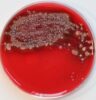
Prof. Dr Alexander Probst has such insight. The biologist is an expert on environmental metagenomics, a method for the genetic analysis of microbes and for which the samples are taken directly from their natural environment. ‘With this method, we can reconstruct the microbial genomes and determine the biological diversity of the specimen – without having to cultivate bacteria in, e.g., a Petri dish.’
WHERE NO MAN HAS GONE BEFORE
‘The method is particularly useful for exploring biodiversity in the deep biosphere,’ says Probst. ‘More than 70 per cent of microorganisms are found in Earth’s subsurface, down to a depth of ten kilometres, and every time we take samples, we discover new species.’ These miniscule lifeforms, invisible to the human eye, have adapted so well to their extreme habitat that most of them cannot be cultured in the laboratory. ‘Without metagenomics, their diversity would therefore remain a mystery to us.’
For Probst, his research is like a Star Trek mission: ‘to go where no man has gone before.’ The 39-year-old has studied numerous ecosystems worldwide, from the South American Atacama Desert to the Swabian Jura. He is particularly interested in analysing virus interactions and infection cycles. In a well-received study, he succeeded in demonstrating that Earth’s depths harbour viruses that attack particular CO2-binding microorganisms – and could thus exert an influence on the planet’s carbon cycle.
But how can this puzzle be pieced together? How is it possible to reconstruct the gene sequence of a single bacterium from a complete microbial society? ‘In what is known as genome-resolved metagenomics, we reassemble individual fragments of genetic material,’ explains Alexander Probst. Oxford Nanopore Technology helps in sequencing the individual pieces. The procedure involves pulling a nucleic acid strand through a tiny channel inside a membrane – a so-called nanopore. As the strand passes through the nanopore, changes in the electric current are detected and analysed, allowing the base sequence to be read. The sequence of bases within the strand – the genetic identity card of a species, so to speak – then enables the assignment of the material to the respective microbe.
TOWARDS A BETTER UNDERSTANDING OF ANTIBIOTIC RESISTANCES
The number of bacteria against which antibiotics are powerless is increasing with breakneck speed worldwide. Scientists are thus looking for new ways to combat resistances – including Alexander Probst at the Research Center One Health Ruhr. ‘There are many things we cannot yet comprehend at the microbiological level,’ says the biologist, ‘such as how the resistance-conferring gene sequence from bacteria in a hospital or a wastewater treatment plant jumps to bacteria in other eco-systems and why hotspots form at some point.’ To gain a better understanding of the genetic mechanisms of resistances, Probst wants to begin with taking samples from rivers and streams within and near wastewater treatment plants. They have already proven useful as a source of information on pathogenic substances during the COVID-19 pandemic. ‘Wastewater is a hotspot for the development, accumulation, and spread of resistant bacteria due to the presence of antibiotic residues. By taking water samples here and studying their genetic material, we can gain a better understanding of where and when this happens.’
In order to identify antibiotic resistance genes that are introduced into the environment by bacteria, the microbiologist has further developed the analytical method: When sequencing environmental samples, he links together genetic information. This allows resistance genes to be assigned to a specific bacterium, thus making distribution patterns visible. In this way, Probst also wants to study how the ecosystem responds to the spread. For example, can a particularly healthy river with a large species diversity ward off the resistant pathogens because the system has no use for them? ‘Models indicate that a healthy ecosystem with a high biodiversity acts like a shield against pathogenic species. I want to find out with my research whether this is also the case at the level of antibiotic resistances,’ explains Probst.
THE RESEARCH CENTER ONE HEALTH RUHR
The Universities of Duisburg-Essen, Bochum, and Dortmund have been consolidating their international top-level research under the umbrella of the Research Alliance Ruhr since 2021. A college of humanities and four research centers are in the process of being established. One of them is the Research Center One Health Ruhr – from Molecules to Systems, where Alexander Probst (UDE) has conducted his research as professor for environmental metagenomics since October 2022. ‘We’re studying the fundamental mechanisms of health and disease. The ecosystem serves as the context, allowing us to consider the complex interactions between environmental health and human health,’ explains Prof. Dr Dirk Schadendorf, director of the Center.
The center creates a multidisciplinary hub for molecular biology, water research, molecular cancer research, and neuroscience in the Ruhr science region – along with exciting career prospects for scientists. The research alliance received 75 million euros in state funding in the development phase and 48 million euros in follow-up funding in December 2022.
Main image: © Alexander Probst